My honest review
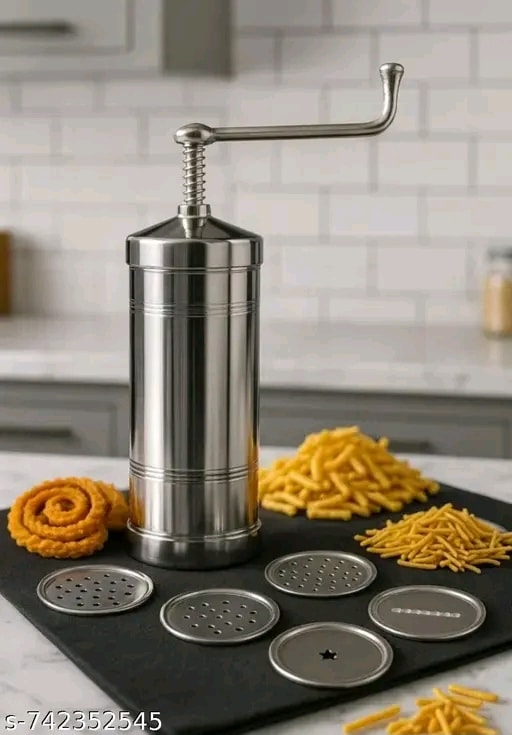
My grandmother used to have one of those ridiculously heavy brass sev presses that required serious arm muscle just to squeeze out a plate of murukku. Every Diwali, someone's wrist was bound to get sore. I bought this stainless steel press mainly to attempt quick weekend idiyappam, but it has quietly become my most reliable kitchen tool for festival snacks.
Why it deserves space on your kitchen shelf
If you like fresh homemade snacks like gathiya, janthikulu, or fine sev for papdi chaat, having a simple sancha makes life ten times easier. This stainless steel press comes with six different jali discs, so you aren't stuck making just one snack shape. You can go from thick murukku to fine idiyappam strings simply by swapping the disc at the base.
Build quality and practical use
The steel finish looks neat and modern on the counter. It feels solid in your hand, and unlike wooden or brass makers, it doesn't hold onto oil smells or rust easily if you dry it properly after washing. The top handle turns smoothly, giving you enough leverage to press out long strands straight into hot oil or steaming plates.
Here's what nobody tells you: always oil the internal walls and the screw threads before loading your dough. If your besan or rice flour dough is too stiff, turning the handle will feel like a gym workout. Keep the dough moist, smear a drop of cooking oil inside, and it extrudes without straining your hands.
Cleaning and everyday maintenance
Cleaning any dough press is slightly annoying because batter loves to hide in the screw grooves. My advice is to throw all the pieces into a bowl of warm water immediately after you finish cooking. Don't let dough dry up inside the cylinder. After a five-minute soak, a basic sponge gets it spotlessly clean.
Pros & cons
- ✓Durable stainless steel build that resists rust
- ✓Includes 6 interchangeable jali discs for different snacks
- ✓Smooth top handle makes turning much easier on your hands
- ✓Compact size fits easily into standard kitchen drawers